Capacity and reach come first
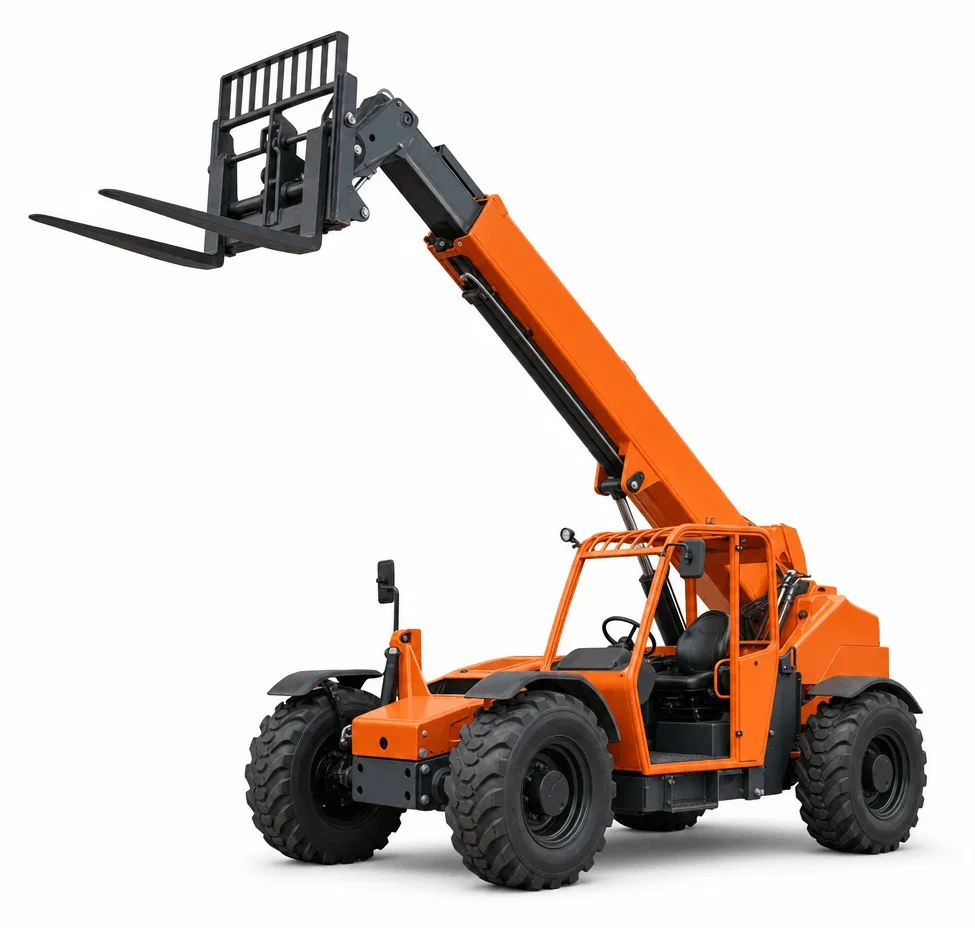
Two numbers set the envelope: maximum load and the radius at which that load must be placed. Capacity charts reduce as the boom extends and rises. If the load must reach over a parapet or into a second-story opening, plan for lower rated capacity at the required distance, not just at the forks.
- Load characteristics: pallet size, center of gravity, and load securement method influence stability assumptions.
- Placement geometry: setback from the structure, height of the opening, and any need to reach over obstacles.
Fort Worth ground and route planning
Expansive clay soils can rut or shift after rain. Rough-terrain models with stabilizing features are commonly planned for unpaved approaches and laydown yards. Check whether the route crosses slabs, ramps, or finished surfaces in older commercial districts; turning radius, axle load, and tire selection can be as limiting as capacity in these areas.
Attachments and visibility considerations
Different carriage and fork setups affect load visibility and approach tolerance. In crowded industrial lots, clear sightlines to the landing point reduce maneuvering in traffic. For long, repetitive cycles between staging and structure, transmission and cooling performance in summer heat should be reviewed in the model literature to avoid derating under continuous duty.
Related categories
- For pure vertical platform work at elevation, see /boom-lift-rental/.
- For indoor pallet work on smooth floors, compare /forklift-rental/.