How Fort Worth sites change scissor lift selection
High-bay interiors in North Fort Worth and massive logistics corridors push platform heights and duty cycles. Long aisles and racking create tight turning and frequent repositioning, so slab electric scissor lifts with narrow widths and non-marking tires are common indoors. Aerospace and industrial sites may add clearance constraints around tooling and sensitive equipment, making compact platforms with fine control useful.
Outdoor projects around expanding commercial zones often involve expansive clay soils that soften after rain and stiffen during heat cycles. That ground can pump under load and slope unpredictably, so rough-terrain scissors with larger tires and leveling support become relevant, along with careful attention to manufacturer wind ratings.
Narrowing the category by measurements
Use these project factors to frame the rental conversation: - Working height and standoff: Can the machine sit below the task, or is lateral reach needed? If lateral reach is required, compare options at /boom-lift-rental/. - Floor condition: Finished slab or polished concrete points to /electric-scissor-lift-rental/; unpaved or uneven surfaces point to /rough-terrain-scissor-lift-rental/. - Platform width and length: Rack spacing and doorway widths limit machine size in local distribution buildings. - Power source and ventilation: Indoor facilities favor electric drives to manage emissions and noise. - Wind exposure: Open-air jobsites across the plains increase wind effects at height; follow unit-specific limits and site procedures.
Common Fort Worth use cases
- Warehouse light replacement, inventory management decks, and conveyor maintenance in large distribution buildings.
- Aircraft component work, access to hangar utilities, and detail inspections where floor protection matters.
- Exterior signage, façade work, and service around redeveloping commercial districts where foot traffic and tight work windows require predictable platform positioning.
When a scissor lift is not the fit
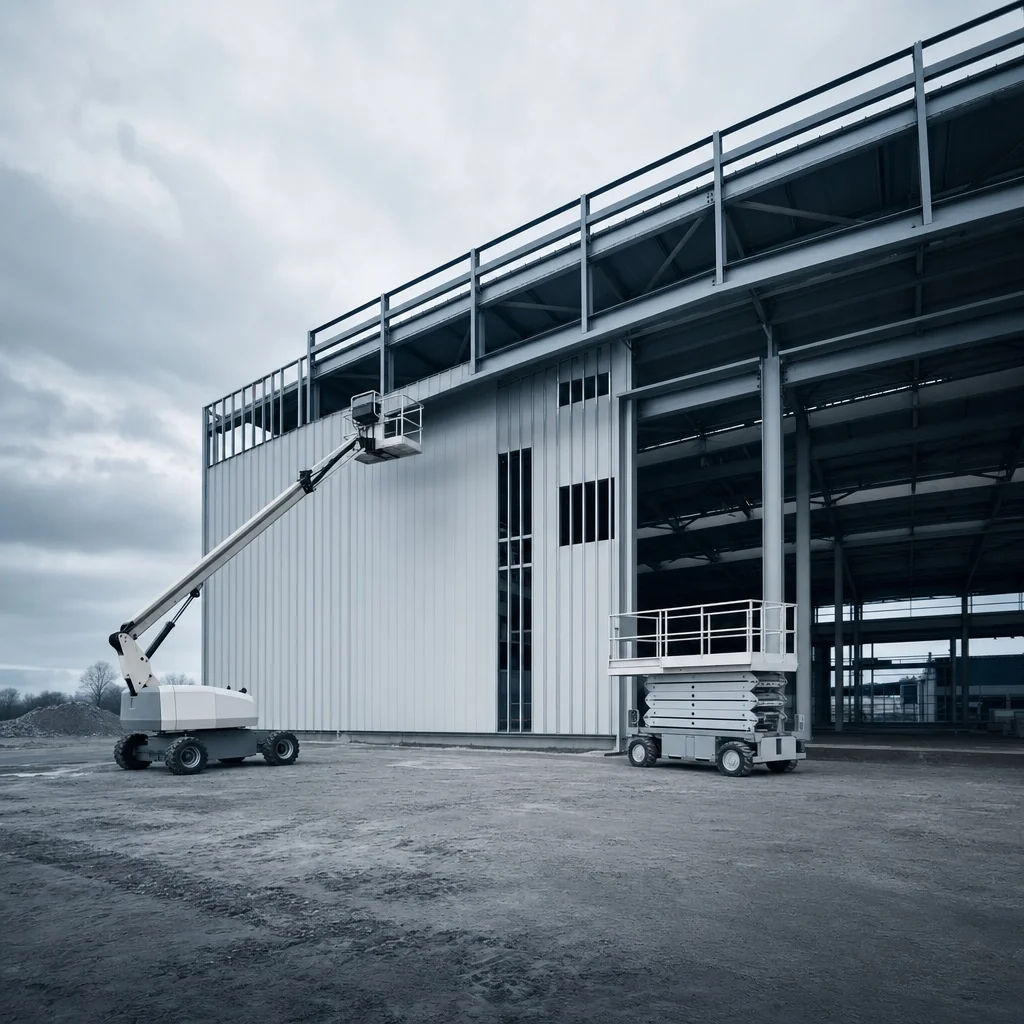
If the task requires reaching over obstacles, a boom lift may be more efficient. Start with /aerial-lift-rental/ to compare scissor versus articulating or telescopic booms.
Related categories
- Indoor access: /electric-scissor-lift-rental/
- Outdoor access: /rough-terrain-scissor-lift-rental/
- Need up-and-over reach: /boom-lift-rental/